
Static vs Dynamic Website – Which is Better for Your Business?
Choosing between a static website and a dynamic website is one of the most important decisionsbusinesses face when building an online presence. Whether you run a startup, service company,eCommerce business, educational platform, gaming portal, or enterprise organization, the type of websiteyou choose directly impacts performance, scalability, maintenance costs, SEO potential, and customerexperience.
In 2026, Google emphasizes user experience, helpful content, mobile responsiveness, and websiteperformance more than ever before. Therefore, understanding the difference between static and dynamicwebsites can help businesses make smarter digital investments.
If you're still planning your website project, you may also find our guide on How to Choose the Best Web Design Company inIndia useful before making a decision.
What Is a Static Website?
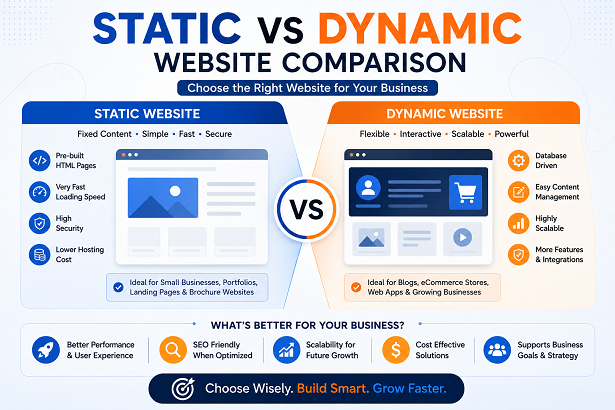
A static website consists of fixed web pages coded primarily using HTML, CSS, and sometimesJavaScript. Every visitor sees the same content because the pages are pre-built and stored exactly as theyappear.
Static websites are often used for:
- Company profile websites
- Portfolio websites
- Landing pages
- Brochurewebsites
- Small business websites
- Event websites
Since static websites do not rely on databases for content generation, they are typically faster, moresecure, and easier to host.
What Is a Dynamic Website?
A dynamic website generates content in real time using databases, server-side programming, andcontent management systems (CMS) such as WordPress, Laravel, Drupal, Shopify, Magento, or customframeworks.
Unlike static websites, dynamic websites can display different content to different users based on:
- User login status
- Location
- User preferences
- Database information
- Shopping activity
- Membership access
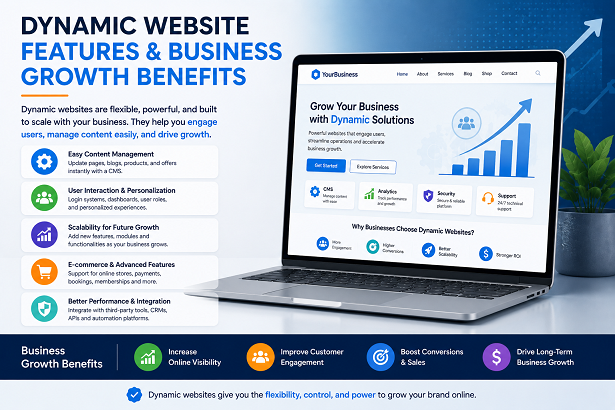
Most modern business websites, eCommerce stores, gaming platforms, educational portals, and SaaSapplications use dynamic architecture.
How Do Static and Dynamic Websites Differ?
Although both types of websites serve content online, they operate very differently.
Which Website Type Is Better for SEO?
This is one of the most frequently asked questions by business owners.
The truth is that both static and dynamic websites can rank extremely well when properly optimized.
Google primarily evaluates:
- Page speed
- Mobile usability
- Content quality
- User experience
- Internal linking
- Core Web Vitals
- Helpful content
Static websites naturally offer faster loading times, which can provide an SEO advantage.
However, dynamic websites make it easier to publish blogs, optimize content, and scale SEO effortsover time.
For SEO-focused businesses, our article on What Is SEO and How ItWorks for Small Businesses provides additional insights.
When Should Businesses Choose a Static Website?
Static websites are often ideal when:
- You need a simple company website
- Content changes rarely
- Budget is limited
- Fast speed is a priority
- You want minimal maintenance
- You need a brochure-stylewebsite
Examples include:
- Consulting firms
- Local service providers
- Small agencies
- Portfolio websites
- Professional profiles
When Should Businesses Choose a Dynamic Website?
Dynamic websites are generally the better choice when:
- You need regular content updates
- You want blogging functionality
- You require useraccounts
- You operate an eCommerce store
- You plan future expansion
- You needadvanced business features
Examples include:
- Online stores
- Educational portals
- Gaming platforms
- Booking websites
- Membership websites
- SaaS applications
Does Website Speed Matter More Than Website Type?
Absolutely.
Google's algorithms increasingly prioritize page experience and Core Web Vitals.
A poorly optimized static website may perform worse than a properly optimized dynamic website.
Important performance factors include:
- Image optimization
- Server performance
- Caching
- Code quality
- Content delivery networks (CDN)
- Mobile responsiveness
Businesses should focus on performance optimization regardless of website type.
Which Option Is More Cost Effective?
Cost depends on business goals.
If your business plans to expand online, a dynamic website often provides better long-term value.
Can Static Websites Become Dynamic Later?
Yes.
Many businesses start with a static website and later migrate to dynamic platforms when growthdemands additional functionality.
Common upgrades include:
- Blog integration
- Customer portals
- eCommerce systems
- Booking engines
- CRM integrations
- Marketing automation
Businesses planning future expansion should consider scalability from the beginning.
How Do Google Core Updates Affect Website Choice?
Google's recent Helpful Content and Core Updates focus heavily on:
- Experience
- Expertise
- Authoritativeness
- Trustworthiness (EEAT)
Google does not favor static or dynamic websites specifically.
Instead, it rewards websites that:
- Provide useful information
- Load quickly
- Work well on mobile devices
- Offerexcellent user experience
- Demonstrate trust and expertise
For businesses looking to improve online visibility, our guide on SEO vs Google Ads – Which is Better for Your Business? canhelp develop a broader marketing strategy.
Which Website Type Is Best for Your Business?
The answer depends on your goals.
- Choose a static website if you need simplicity, speed, and low maintenance.
- Choose adynamic website if you need flexibility, growth, content management, and advanced functionality.
For most modern businesses in 2026, dynamic websites often provide greater long-term opportunitiesbecause they support SEO, blogging, lead generation, customer engagement, and business automation.
Conclusion
Static and dynamic websites both have strengths and limitations. Static websites offer exceptionalspeed, security, and affordability, while dynamic websites provide flexibility, scalability, and powerfulcontent management capabilities.
The best choice depends on your business size, future growth plans, marketing strategy, and customerrequirements.
Before making a decision, consider:
- Business goals
- Budget
- Content requirements
- SEO strategy
- Futurescalability
- User experience expectations
A professionally planned website can become one of the most valuable assets for long-term businessgrowth.
Frequently Asked Questions (FAQs)
Which is faster: static or dynamic websites?
Static websites are generally faster becausepages are pre-built and do not require database queries.
Which website type is better for SEO?
Both can perform well in SEO when optimized properly.Content quality and user experience matter more than website type.
Can dynamic websites handle more traffic?
Yes. Dynamic websites are designed for scalabilityand can support larger businesses and advanced functionality.
Are static websites more secure?
Generally yes, because they have fewer attack surfaces andoften do not use databases.
Can I convert a static website into a dynamic website later?
Yes. Many businesses start withstatic websites and upgrade as their needs grow.
If you want expert help, check our website designing services.
Sources & References
- GoogleSearch Central Documentation
- Google Core Web Vitals Documentation
- Google HelpfulContent Guidelines
- Google EEAT Best Practices
This article is written according to Google Helpful Content and EEATprinciples to provide accurate, user-focused information for business owners and website decision-makers.